Showing posts with label photography. Show all posts

Sunday, December 14, 2014

Photo


Our fingers lace,
as if they were always knit;
you guide me into the street,

where centuries of secrets rise
between paving stones,
from under darkroom doors.

Like our first embrace,
my new jacket goes unnoticed 
in monochrome. 

Stolen glance ― snap! 
Your eyes flash Kodak,
encompassing everything north. 

Nothing important is exchanged; 
a few riddles, exhaled laughs, 
camera-shy smiles. 

Under a suspended crescent,
you surprise ― all quick-turn and lips ―
like the Doisneau.


tk/December 2014


Evocative monochrome read by R.A.D. Stainforth...


Sunday, June 22, 2014

Shoot


Dusk is recommended
for modest petticoats.
For best light, wait for the sun
to leave its comfort zone.

Capture rhapsody
in more pixels than God.
Press your head against the earth.
Feel the rhythm.

Coax summer percussion.
Join the conga.  Be seen on the street.
Peonies wear long-stemmed heels.
Ants pluck them tom-tom pink.

Look deeper than June,
past chlorophyll and bees.
Stop searching for color.
Think dappled things.

Roses strut runway red.
Shoot them in monochrome.


tk/June 2014


R.A.D. Stainforth steps out of his black and white world for a lovely summer read:  


Sunday, December 29, 2013

Selfie

self-portrait, Francis Bacon 

You step into the room, see yourself
look up from somewhere distant.

Your eyes reflect a safe interior,
without the anxiety of an unwanted stare.

Windows open to new air.

You stand unadorned
apart from the self-scorn
you wear around your neck.

Here is a place with no mirrors, no squinting,
thrust against the space between you.

Stretch out your arm, capture a forever moment
of the skin genuine, sweat-soaked and intimate. 


tk/December 2013 


Last month the word "selfie" was announced by the Oxford English Dictionary as "word of the year".

R.A.D. Stainforth's lovely bewhiskered read: 


Saturday, August 25, 2012

earliest photographic self-portrait


Robert Cornelius, self-portrait, Philadelphia, 1839, facing front, arms crossed. 
Inscription on backing: The first light-picture ever taken. 1839.

One of the first photographs made in the United States, this quarter-plate daguerreotype, taken in the yard of the Cornelius family's lamp-making business in Philadelphia, is said to be the earliest photographic portrait of a person.

He's hot. Very hot.  

Tuesday, April 17, 2012

Toni Frissell


click to embiggen
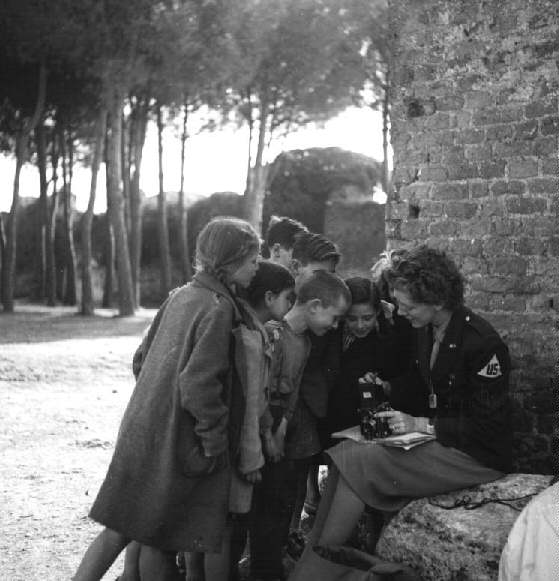
I've been thinking a lot about Toni Frissell this week, since I have one of her stunning underwater fashion shots as my Facebook banner. She's remembered today, principally for her high-fashion photography for Vogue and Harper's Bazaar, but she also volunteered her photographic services to the American Red Cross, Women's Army Corps, and Eighth Army Air Force during WWII. On their behalf, she produced thousands of images of nurses, front-line soldiers, WACs, African-American airmen, and orphaned children.

Frissell's leap from fashion photography into war reportage echoed the desires of earlier generations of newswomen to move from "soft news" of fashion and society pages into the "hard news" of the front page. On volunteering for the American Red Cross in 1941, Frissell said: "I became so frustrated with fashions that I wanted to prove to myself that I could do a real reporting job." 

Frissell's work usually involved creating images to support the publicity objectives of her subjects. Her photographs of WACs in training and under review by President Franklin Roosevelt fit into a media campaign devised to counter negative public perception of women in uniform. Likewise, Frissell's images of the African American fighter pilots of the elite 332nd Fighter Group were intended to encourage positive public attitudes about the fitness of blacks to handle demanding military jobs.


Here are faces that I have found memorable. If they are not all as happy as kings, it is because in this imperfect world and these hazardous times, the camera's eye, like the eye of a child, often sees true.   ―Toni Frissell


source: The Library of Congress

Wednesday, March 28, 2012

Gordon Parks

Ingrid Bergman at Stromboli, Italy, 1949, by Gordon Parks

I had a great sense of curiosity 
and a great sense of just wanting to achieve, 
I just forgot I was black 
and walked in and asked for a job 
and tried to be prepared for what I was asking for.

Gordon Parks

My interest in Gordon Parks was renewed this week, when I posted one of his photos on Facebook, and a friend mentioned meeting him in New York. Parks was the first African-American to work as a staff photographer for Life magazine, and the first black artist to produce and direct a major Hollywood film, The Learning Tree, 1969, adapted from his autobiographical novel.

He developed a large following as a photographer for Life for more than 20 years, and by the time he was 50, he ranked among the most influential image makers of the postwar years. In the 1960s he began to write memoirs, novels, poems and screenplays, which led him to directing films. In addition to The Learning Tree, he directed the popular action films Shaft and Shaft's Big Score! In 1970 he helped found Essence magazine, and was its editorial director from 1970 to 1973.

At Life Mr. Parks also used his camera for less politicized, more conventional ends, photographing the socialite Gloria Vanderbilt, who became his friend; a fashionable Parisian in a veiled hat puffing hard on her cigarette, and Ingrid Bergman and Roberto Rossellini at the beginning of their notorious love affair.

On his own time, he photographed female nudes in a style of Baroque painting, experimented with double-exposed color film, and recorded pastoral scenes evoking the pictorial style of early twentieth century art photography.


Source: The New York Times

Saturday, March 24, 2012

flickr flackr fluckr


I'm adding some of my photos to flickr, a few at a time. 
If you'd like to take a peek, click HERE for my page.


A picture is a secret about a secret, 
the more it tells you, the less you know.

― Diane Arbus

Thursday, December 1, 2011

You push the button, we do the rest...


My paternal grandfather with camera circa 1940
click to embiggen
It's tradition at Willow Manor to hop in the old green Land Rover and head to the Franklin County Fair Grounds the Friday after Thanksgiving for the season opening of the Scott Antique Show.  Hundreds of vendors set up their booths once a month, from November through March. They happen to have a show in Atlanta, as well, for those of you who live in that southern neck of the woods.  I love to pull my red vinyl two-wheel cart along behind me, in search of buried treasure. 

I picked up a sweet little Brownie Flash Six-20, a 1940 variation of the quintessential American camera for $2.00.  The first Brownie was introduced by Eastman Kodak in February 1900, as a very basic cardboard box camera with a simple meniscus lens that took 2 1/4 inch square pictures on 117 roll film. The Brownie introduced the concept of the snapshot, intended as a camera that anyone cold afford, leading to the popular slogan, "You push the button, we do the rest."  The camera was named after the popular cartoons created by Palmer Cox.  


Friday, November 18, 2011

you can only hold a smile for so long


At first glance, this seems to be a skull with two terrifying rows of teeth.  Actually, it's a child's skull with the adult teeth, ready to move down. Talk about a face-full of teeth! I find it fascinating, since I'm all about stones and bones. My daughter had an adult tooth that did not move down to force out the childhood tooth.  Surgery, odd rubber bands, and braces pulled it from deep in her face down into the appropriate spot.  It's amazing what modern orthodontics can do.

Image by Stefan Schäfer, taken at the Hunterian Museum in London.


You can only hold a smile for so long, 
after that it's just teeth.

Chuck Palahniuk, Invisible Monsters

Speaking of holding a smile for so long, did you know the reason people are not smiling in vintage photographs is because the shutter speed was much slower then?  It was easier to hold a non-smiling face completely still.

my great-great-great-grandfather
Joseph Lorenzo Dow Hanna
self-portrait, tintype, circa 1860s

Wednesday, September 28, 2011

the number of dead people is increasing


Isn’t it so weird how the number of dead people is increasing even though the earth stays the same size, so that one day there isn’t going to be room to bury anyone anymore? For my ninth birthday last year, Grandma gave me a subscription to National Geographic, which she calls “the National Geographic”. She also gave me a white blazer, because I only wear white clothes, and it’s too big to wear so it will last me a long time. She also gave me Grandpa’s camera, which I loved for two reasons. I asked why he didn’t take it with him when he left her. 

my paternal great-grandfather, Glenn Hanna
with his portable bellows camera, circa 1910
She said, “Maybe he wanted you to have it.” 

I said, “But I was negative-thirty years old.” 

She said, “Still.” 


Anyway, the fascinating thing was that I read in National Geographic that there are more people alive now than have died in all of human history. In other words, if everyone wanted to play Hamlet at once, they couldn’t, because there aren’t enough skulls. 


Speaking of dead people, photography runs rampant in my DNA. All my paternal grandfathers were photographers, starting with Joseph Lorenzo Dow Hanna in the 1850s, when photography was a new fangled art. Friday, on my routine Goodwill stop, I spotted this lovely old Kodak accordion camera, a smaller version of the one my great-grandfather Glenn Hanna used, back in 1910. It stirred that crazy photographic gene and I had to bring it home with me. All the grandpas nodded in approval.


image:  Kodak folding accordion camera, my latest Gee-Dub find